
6 Best Mindset Reset Retreats and Live Experiences
You have done the journaling, read the books, and still catch yourself running the same old loop. A live reset can break that pattern faster than another podcast episode, but only if the room, the facilitator, and the follow-up actually fit how you change.
This guide breaks down what separates a weekend that fades from one that sticks, including format, group size, credentials, price, and post-event support. You will also get a clear look at six options, from Eli Bowman and his 75Mind program to larger stage events, plus a straightforward way to pick the right one for you.
What to Look For in a Mindset Reset Retreat or Live Experience
Choosing the right mindset reset retreat or live experience can feel overwhelming, so this section breaks down the essential criteria to evaluate before committing your time and money.
Three factors matter most: format, facilitator, and logistics. A mismatch in any one of them can turn a promising personal transformation into an expensive disappointment.
Format determines how deeply you engage. The facilitator shapes whether insights last. Logistics, including price, duration, and follow-up, decide whether the experience supports real integration or fades within weeks.
The detailed sections below walk through each factor so you can compare options with confidence and choose an immersive workshop or wellness retreat that fits your goals, learning style, and budget.
Format, Setting, and Group Size
The format, whether it is a weekend intensive, a week-long retreat, or a virtual workshop, dictates how deeply you can engage with the material and how much distraction you can leave behind.
In-person retreats remove daily triggers and make room for digital detox and sustained self-reflection. Online live experiences cost less and fit busy schedules, but they demand stronger self-discipline since your normal environment stays within reach.
Residential programs, where you sleep on site, tend to produce deeper immersion than non-residential ones where you commute each day. The setting matters too. Nature-based venues support stress relief and mental clarity, urban locations offer convenience, and silent or semi-silent formats amplify introspection for those who crave quiet.
Group size shapes the emotional tone:
- Small groups (10 to 20 people) allow personal attention and vulnerable sharing.
- Medium groups (30 to 50) balance intimacy with a sense of community.
- Large groups (100 or more) generate collective energy and inspiration, though individual time with the facilitator shrinks.
Common activities include breathwork, yoga, guided visualization, journaling, sound healing, and intention setting. Match the format to your comfort zone. If you have never done group inner work, a smaller, gentler program is usually the wiser first step.
Facilitator Credentials and Methodology
The facilitator's background and the methodology they use are the strongest predictors of whether a retreat will create lasting change or just a temporary high.
Start with credentials. Look for formal training and certifications such as NLP, ICF coaching credentials, licensed therapy, or recognized yoga and breathwork certifications. Years of experience matter, but so does relevant experience with the specific issues you want to address, whether that is burnout recovery, limiting beliefs, or emotional reset.
Next, examine the methodology. Some programs lean on neuroscience and cognitive reframing, drawing on ideas like neuroplasticity and positive psychology. Others take a spiritual route with energy healing, chakra balancing, or manifestation practices. Many blend the two. None is automatically better. What matters is whether the approach aligns with your values and goals.
Watch for red flags:
- No listed certifications or training
- Vague claims about subconscious reprogramming with no explanation
- Few or no testimonials, or testimonials that sound identical
- Pressure to commit quickly or promises of guaranteed transformation
Ask direct questions before booking. What is your approach to subconscious reprogramming? How do you handle emotional breakthroughs during a session? What happens if a participant becomes overwhelmed? A skilled facilitator answers clearly and welcomes scrutiny.
Price, Duration, and Follow-Up Support
A retreat's price tag should reflect not just the event itself but the duration, inclusions, and, crucially, the follow-up support that helps you integrate insights into daily life.
Typical ranges break into three tiers:
- Budget ($500 to $1,500) for weekend workshops, online live experiences, and non-residential programs.
- Mid-range ($2,000 to $5,000) for residential retreats of several days with meals and lodging included.
- Premium ($5,000 and up) for longer immersions, exotic locations, well-known facilitators, or very small groups.
Cost drivers include location, duration, facilitator fame, and group size. A remote nature venue with a large group usually costs less than a luxury urban setting with twelve participants.
Duration deserves equal attention. A weekend can spark insight, but five to seven days gives room for deeper self-discovery and emotional reset. Multi-week programs suit people seeking a full life pivot.
Follow-up is where many programs fall short. Look for coaching calls, community access, integration worksheets, or accountability groups. Programs with no post-event support often leave participants inspired on the final day and adrift a month later.
To judge value, compare the total cost against one-on-one life coaching rates for the same number of hours. When you factor in lodging, meals, and group sessions, a well-structured retreat can offer strong relative value, provided the integration support is genuinely there.
1. Eli Bowman - Best Overall
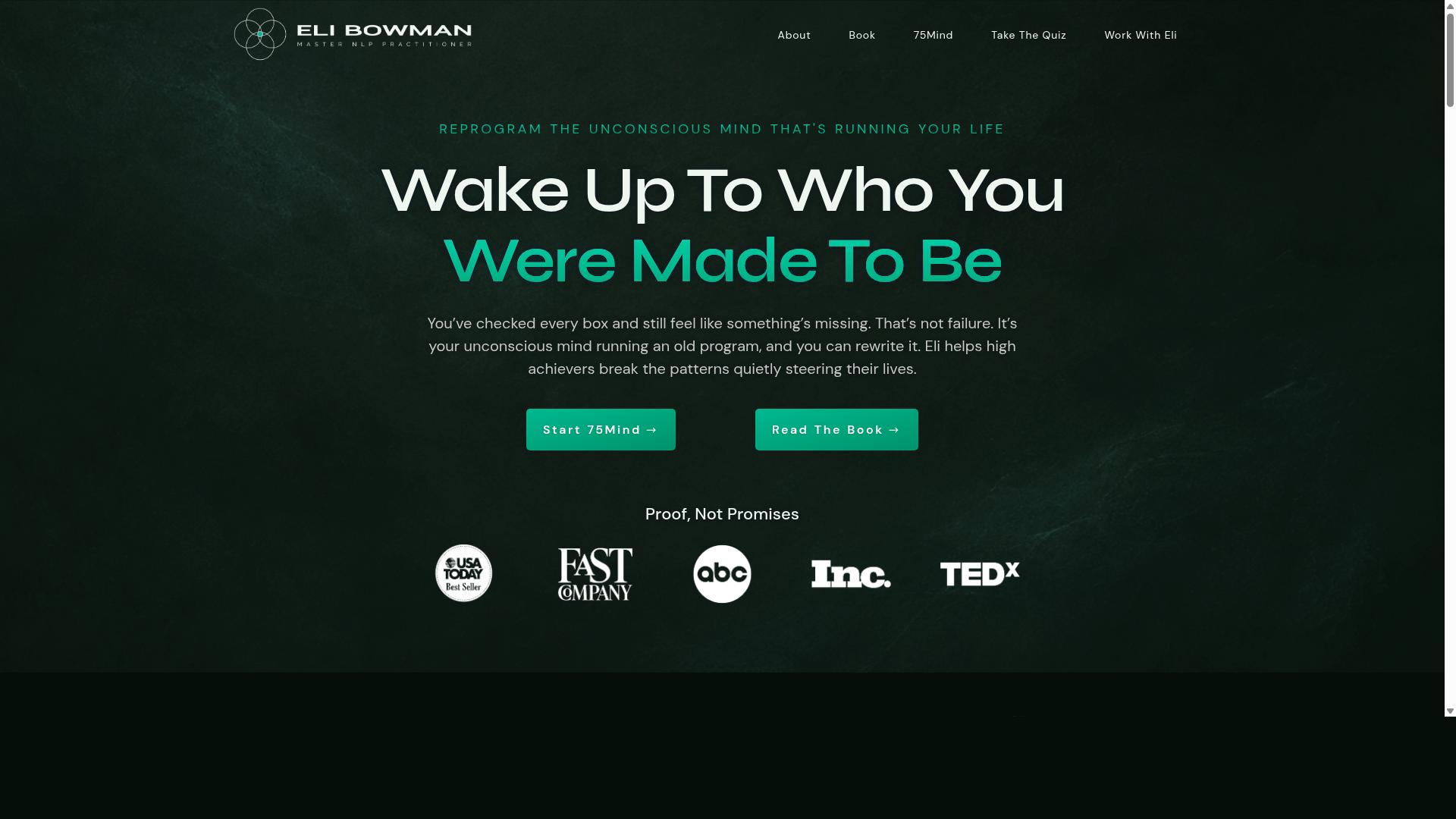
Eli Bowman earns the top spot for his unique blend of neuroscience-based mindset coaching and immersive live experiences that target the unconscious patterns holding high achievers back. As a mindset keynote speaker, author, and NLP coach, he built his work around a single premise: that 90-95% of everything you do, feel, and decide is controlled by the unconscious mind. That focus separates his retreats and live experiences from standard motivational events.
His credentials include a USA Today bestselling book, a TEDx talk, and Master NLP Practitioner certification from the American Board of Neuro-Linguistic Programming. The brand operates under Movement Maker LLC. The details below explain why his programs lead this list and what each format offers.
Why Eli Bowman Tops This List
Eli Bowman stands out because he combines a rigorous, neuroscience-backed methodology with a deep understanding of the high-achiever mindset, making his programs both practical and transformative. His certifications and body of work give that claim substance: Master NLP Practitioner status through the American Board of Neuro-Linguistic Programming, a USA Today bestselling book, and a TEDx talk.
Many wellness retreats lean on inspiration alone. A weekend of breathwork, sound healing, or guided visualization can produce genuine stress relief and emotional reset. But inspiration fades once daily routines return. Bowman's approach targets the subconscious programming underneath the behavior, which is where self-sabotage and limiting beliefs tend to live.
His audience is specific: high achievers who feel something is missing, repeat the same patterns despite their success, or keep hitting an income ceiling no amount of effort seems to break. For these clients, the problem is rarely a lack of discipline. It is an unconscious pattern quietly steering decisions, and that is the layer his coaching and live experiences are built to address.
Unlike purely spiritual or motivational formats, his work frames personal transformation through subconscious reprogramming and neuroplasticity. That makes it a fit for people who want mental clarity and lasting change rather than a temporary high. It also explains why his sessions function as a true mindset reset retreat rather than a general wellness getaway.
Retreats, Live Experiences, and the 75Mind Program
Eli Bowman offers a range of ways to engage, from intimate retreats and keynote speaking to the self-paced 75Mind program, each designed to help you break unconscious patterns. The right format depends on how much structure, immersion, and accountability you want.
- One-on-one coaching for personalized insight into your unconscious patterns
- Keynote speaking for events and organizations
- Retreats and live experiences for immersive, in-person work
- The book 'The Program', a USA Today bestseller on reprogramming the unconscious mind
- 75Mind, a 75-day mindset program priced at $75 as a one-time purchase with instant access
75Mind includes a participant guide PDF, a phase-by-phase roadmap, daily reflection prompts, rules and standards, and community access. It runs on eight daily habits: tracking sleep, a morning gratitude practice, meditation or prayer, 30 minutes of intentional physical movement, at least 30 minutes of focused reading, daily social accountability, drinking 100 oz of water, and an evening journal entry.
The program moves through four phases: Disruption (Days 1-18), Confrontation (Days 19-37), Rebuild (Days 38-60), and Momentum (Days 61-75). Unlike 75 Hard, it is mindset-first rather than fitness-first, and it is built on NLP principles. The rule is strict: complete all eight daily habits or restart from Day 1, with zero negotiation.
Choose 75Mind if you are a self-starter who wants a structured daily practice at a low one-time cost. Choose a retreat or live experience if you want full immersion and direct guidance. Coaching and speaking are quoted custom based on your needs, and services are available globally online. For anyone weighing a mindset reset retreat, the combination of credentials, live formats, and a self-paced entry point makes this the strongest overall option on the list.
2. Dr. Joe Dispenza
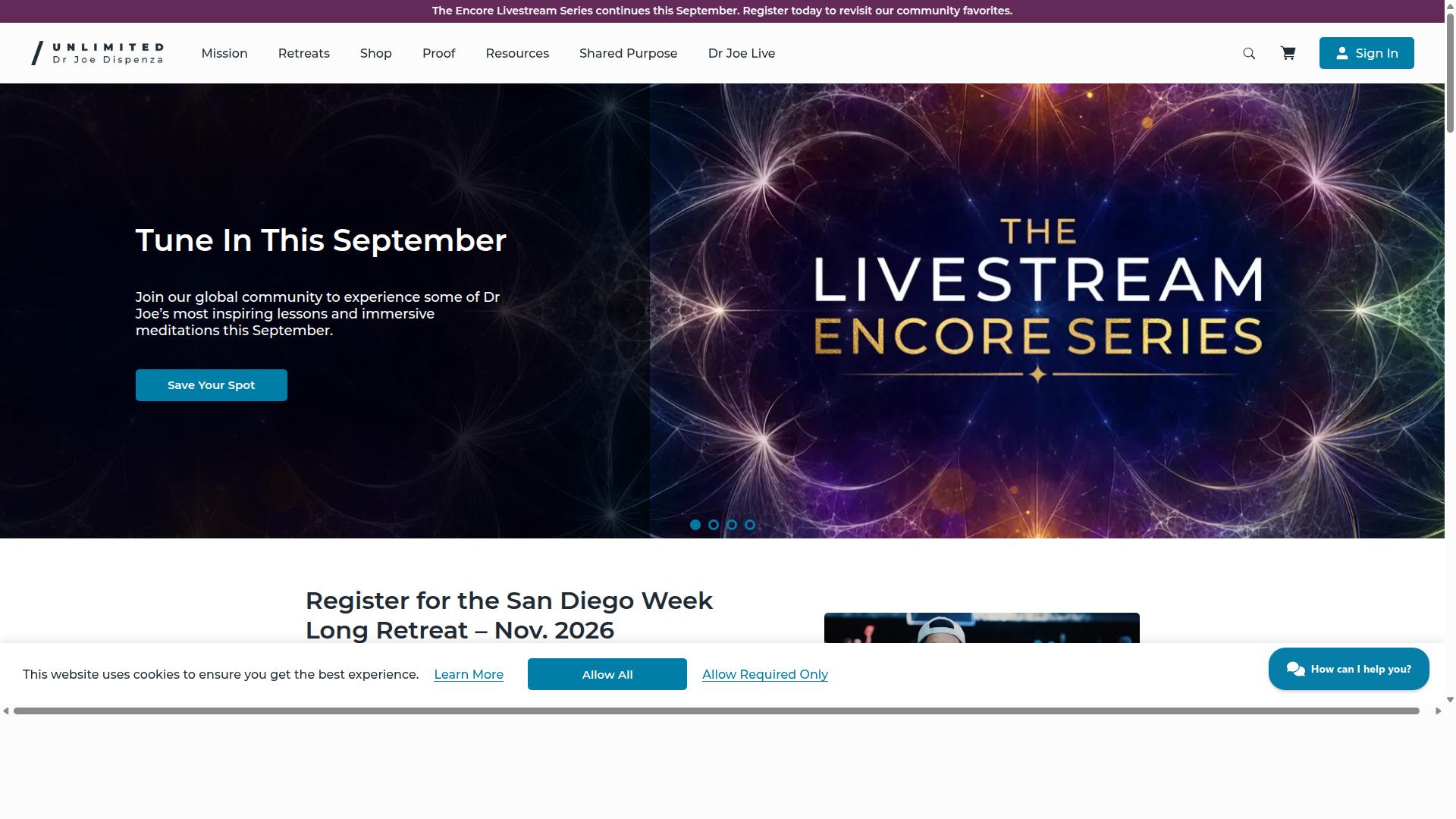
Dr. Joe Dispenza is a globally recognized teacher known for his research-based approach to neuroplasticity and meditation, offering large-scale retreats and online courses. His background as a chiropractor, combined with years of study in neuroscience, behavioral science, and epigenetics, shapes a teaching style that blends scientific language with meditative practice. For anyone exploring a mindset reset retreat, his events sit at the large-scale, lecture-driven end of the spectrum.
His best-known book, Breaking the Habit of Being Yourself, outlines the core idea behind his work: that repeated thoughts and emotional patterns wire the brain in predictable ways, and that those patterns can be consciously rewired. Other titles, including You Are the Placebo and Becoming Supernatural, expand on the same themes of neuroplasticity and subconscious reprogramming.
Dispenza's in-person retreats are known for their scale. Groups often exceed 500 attendees, and some events fill arenas or large conference halls rather than intimate studio spaces. That format creates a high-energy group atmosphere, though it also means less individual attention than a smaller immersive workshop would offer.
A typical retreat day mixes several elements:
- Long guided meditations, sometimes lasting an hour or more
- Lectures on brain function, stress, and habit formation
- Guided visualization and intention setting exercises
- Group energy healing or coherence practices
- Journaling and self-reflection prompts between sessions
Retreats generally run four to seven days, with pricing that commonly falls in the $1,000 to $3,000 range depending on location, length, and venue. Travel and lodging are usually separate. Dispenza also offers online courses at lower price points, which can serve as a lower-commitment introduction to the same material.
One trade-off worth noting: because of the large-group design, personalized follow-up after an event may be limited. Attendees looking for ongoing one-on-one support, accountability, or a smaller cohort experience may find that aspect thinner than the live experience itself. That is a structural feature of the format rather than a flaw, but it is worth weighing against what you want from a retreat.
For a mindset reset retreat focused on mental clarity and the science behind thought patterns, Dispenza's events offer a structured, lecture-heavy path. Those who prefer small groups, hands-on coaching, or sustained post-event integration may want to compare this option against more intimate live experiences before deciding.
3. Millionaire Mind Intensive
The Millionaire Mind Intensive, created by T. Harv Eker, is a high-energy, large-group seminar focused on rewriting your money blueprint and overcoming limiting beliefs about wealth. It is one of the better-known live money mindset events, and it draws people who want a concentrated dose of motivation rather than a quiet escape.
Unlike a traditional mindset reset retreat, this is a seminar first and foremost. The format runs across three full days and often fills a large ballroom or convention hall with thousands of attendees at once.
If you are comparing this event against a residential wellness retreat, the differences are worth understanding before you register. The sections below cover how it works, what it costs, and where it fits.
Format and structure. The three-day schedule blends stage lectures, written exercises, and small-group work with the people seated around you. Expect long sessions, high volume from the presenter, and structured prompts you complete on the spot.
There is no residential component. You arrange your own travel, hotel, and meals, which separates it from an immersive workshop where lodging and programming are bundled together. Think conference, not digital detox.
Methodology. The curriculum draws on Eker's book Secrets of the Millionaire Mind and on NLP-inspired techniques. Common elements include guided visualization, affirmations, and exercises aimed at surfacing limiting beliefs about money.
The underlying idea is subconscious reprogramming: identify the money messages you absorbed early in life, then deliberately replace them. It overlaps in spirit with cognitive reframing and the broader growth mindset conversation, though the delivery is far more theatrical than a therapy session.
Pricing. Entry tickets are commonly reported in the range of $500 to $2,000, depending on tier, city, and how early you buy. Treat that as a general range rather than a fixed figure, since pricing varies by event and changes over time.
Be aware that the event is known for upsells. Back-of-room offers for advanced courses and coaching packages are a standard part of the experience, so decide your budget before you attend.
Pros.
- Lower entry cost than many multi-day retreats
- High energy and strong group momentum
- Structured exercises you can apply immediately
- Large alumni community and repeat events in many cities
Cons.
- Very large groups, so personal attention is limited
- Sales pressure around premium programs
- No lodging, meals, or downtime built in
- Little of the quiet reflection a retreat provides
Who it suits. This works best for someone who wants a jolt of motivation, a structured framework for money beliefs, and a live experience shared with a big crowd. It suits people who thrive on energy and accountability.
It suits less well if you are seeking stress relief, solitude, or burnout recovery. For that, a residential retreat with mindfulness meditation, journaling, and space for self-reflection is usually the better match.
One practical note: the intensity is real. Three days of long sessions in a packed room can be draining, so plan a lighter schedule around it and give yourself time to process what comes up.
4. Ed Mylett
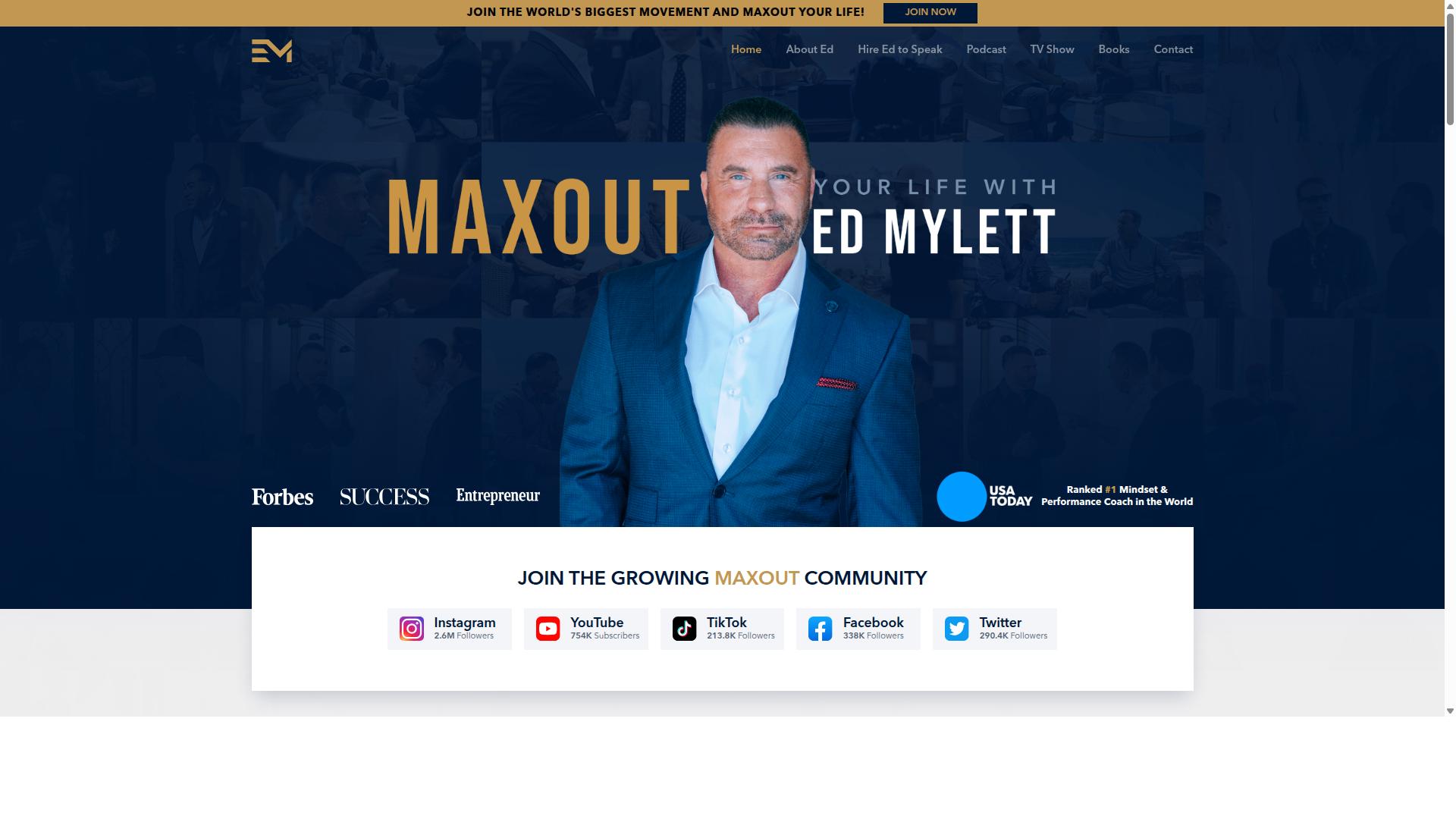
Ed Mylett is a top motivational speaker and entrepreneur who hosts live events and masterminds that blend peak performance strategies with personal development. He is a global speaker, coach, and 2x bestselling author, and USA Today ranked him the #1 Mindset & Performance Coach in the world.
His background gives his live experiences real credibility. He built and sold businesses before moving into coaching, and he privately mentored top professional athletes, entertainers, business executives, and politicians. That mix of boardroom experience and locker-room access shapes how he talks about performance.
His written work includes The Power of One More and #MAXOUT YOUR LIFE. He also hosts The Ed Mylett Show, ranked among the Top 5 podcasts in the world, with 800+ episodes and 10,500+ five-star reviews. For many attendees, the podcast is the first step before ever buying a ticket.
His live experiences tend to run as one-day or weekend events, and they sometimes sit inside larger mastermind programs. Speaking engagements are also part of his public calendar. Exact formats shift by city and year, so it helps to check the current schedule rather than assume a fixed structure.
Typical content leans on a few recurring themes:
- Mindset and the daily habits that shape long-term results
- Discipline and follow-through when motivation fades
- Relationships, including how personal circles affect growth
- Faith and purpose as anchors for hard seasons
Pricing for these experiences varies widely. Mastermind-style programs often fall somewhere in the $500 to $5,000 range, while single-day events may cost less. Treat any figure as a general benchmark, since tiers and inclusions change.
One honest caveat: these events are more motivational than clinical. They are built to inspire action and shift perspective, not to deliver therapy or clinical treatment. Anyone working through serious mental health concerns should pair this kind of live experience with a licensed professional.
For a mindset reset, that distinction matters. A weekend with a high-energy speaker can spark mental clarity and a genuine emotional reset, but the lasting change comes from what you do in the weeks after. Go in expecting a catalyst, not a cure.
5. Jesse Itzler

Jesse Itzler offers unique, adventure-based live experiences like the 29029 Everesting event, designed to push physical and mental limits. A serial entrepreneur, author, and ultra-endurance athlete, Itzler built his reputation on testing what the body and mind can endure together.
His background spans business and endurance sports. He co-founded companies, wrote Living with the Monks, and has completed grueling races that most people would consider impossible. That blend of commerce and grit shapes every experience he runs.
Where traditional wellness retreats lean on quiet reflection, Itzler's events lean on physical challenge as a catalyst for personal transformation. The discomfort becomes the teacher, and the mountain becomes the mirror.
What the Events Involve
The flagship experience, 29029, asks participants to hike or climb the equivalent of Mount Everest's height, 29,029 feet, within 36 hours. That means repeated ascents of a single mountain, often through the night, with fatigue and doubt as constant companions.
It is team-based and physically demanding, with mindset coaching woven into the format rather than delivered as a separate lecture. Participants climb in groups, support each other through low points, and confront limiting beliefs in real time.
Beyond 29029, Itzler runs other retreats and live gatherings through his Adventure Club and speaking engagements. These vary in structure but share a common thread: shared effort, earned insight, and a group bond that forms fast under pressure.
Typical events run 2 to 4 days, and pricing often falls in the $2,000 to $5,000 range depending on the experience. Exact costs vary by event, so checking current details directly is wise before committing.
Itzler also sells digital resources for those who want his thinking without the altitude. His site lists Living with the Monks at $15.00, The Art of Storytelling at $97.00, and his Ultimate Coaching Catalogue at $499.00. A weekly newsletter, Free Swim, offers a lower-commitment entry point.
Who These Experiences Suit
These are not traditional mindset reset retreats. There is little silence, minimal journaling, and no spa schedule. Instead, the reset comes through exhaustion, teamwork, and the quiet realization that you are capable of more than you assumed.
That makes them a strong fit for people who struggle to sit still with their thoughts. If mindfulness meditation and guided visualization feel too passive, a mountain may deliver the mental clarity that a cushion cannot.
- Good fit: high-energy people who process emotion through action
- Good fit: those facing a career or life transition who want a hard reset
- Less ideal: anyone seeking gentle stress relief or holistic healing
- Less ideal: those with injuries or conditions that limit strenuous activity
The transformation here is earned rather than guided. It can be profound for the right person, and it can catalyze shifts in confidence and self-belief that carry into daily life. For others, the physical toll may outweigh the insight.
Anyone considering 29029 or a similar event should train seriously beforehand and consult a physician. The experience rewards preparation, and the mental gains tend to scale with how honestly you meet the challenge.
6. Jack Canfield
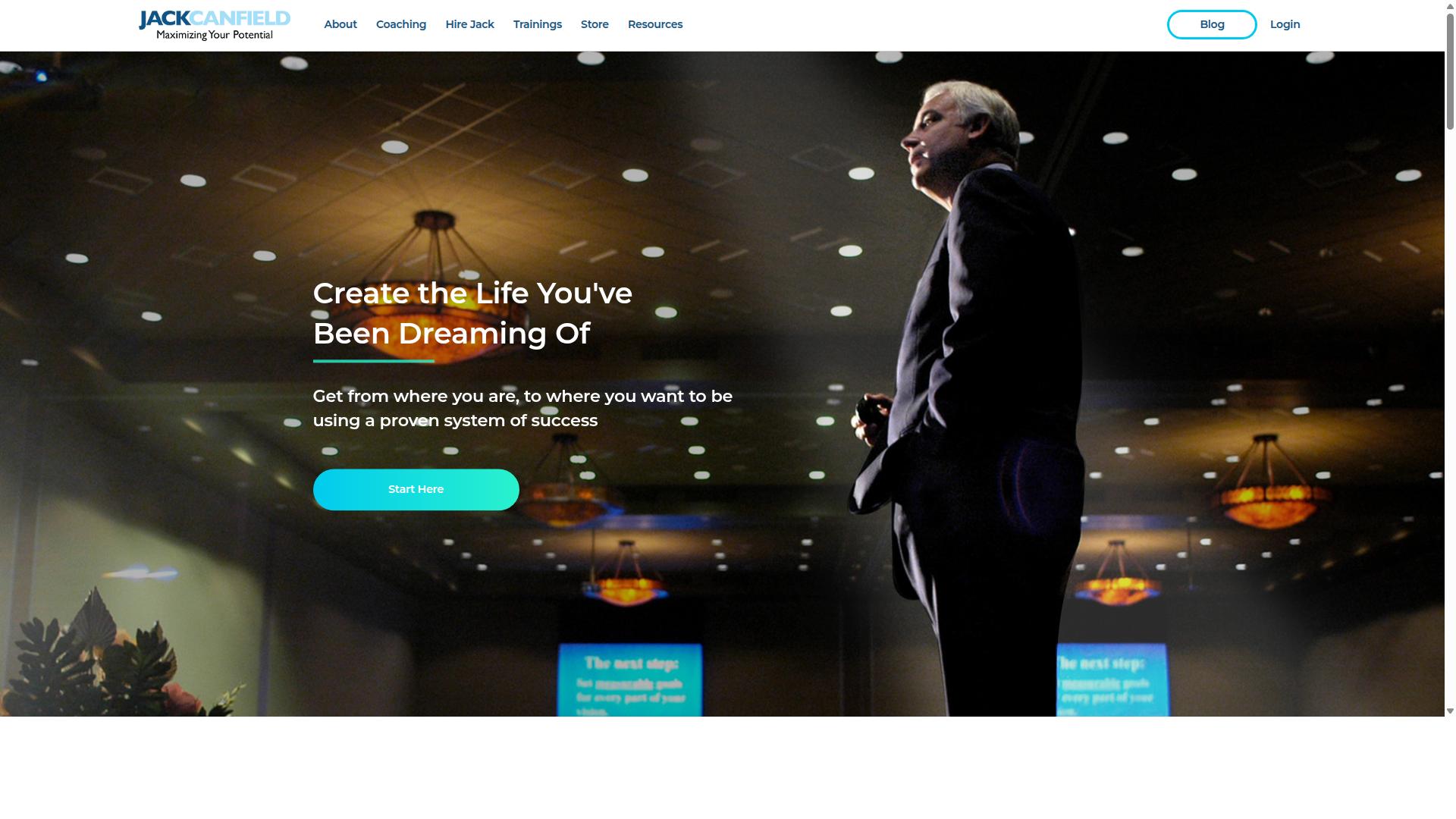
Jack Canfield, co-creator of the 'Chicken Soup for the Soul' series, offers live training and retreats based on his 'Success Principles' framework. His approach has made him one of the most recognized names in the personal development space, and his teachings center on goal setting, visualization, and overcoming limiting beliefs.
Canfield's live experiences typically run as multi-day seminars or retreats, often spanning two to five days. His flagship event, Breakthrough to Success, has been scheduled for June 26 to 28, 2025, in Orange County, California, giving attendees a concentrated window to work through his core methods.
His framework rests on 67 Success Principles, a body of material he has refined over decades of teaching. The curriculum leans on guided visualization, intention setting, and self-reflection exercises designed to help participants identify and reframe the thoughts holding them back.
What to Expect at a Canfield Event
Attendees can expect a structured, motivational format rather than a clinical or neuroscience-driven one. The style is traditional motivational speaking, blending storytelling, group exercises, and personal reflection. Sessions aim to build mental clarity and a renewed sense of direction.
Canfield's team reports having trained over 2,700 students across 107 countries, which speaks to the reach of his live programming. The audience tends to include entrepreneurs, educators, corporate leaders, coaches, trainers, speakers, and authors, along with general personal growth seekers.
Because the format is group-based and high-energy, it may suit people who draw motivation from a room full of like-minded participants. Those seeking a quieter, more introspective wellness retreat atmosphere might find the tone different from what they expect.
Pricing and Program Options
Live seminar and retreat pricing for events in this category generally falls in the $1,000 to $3,000 range, though exact figures vary by event and package. Canfield's public materials do not list specific prices, so interested attendees should confirm current rates directly.
Beyond live events, Canfield offers Canfield Coaching, a personalized one-on-one program covering Personal Success, Book Writing and Publishing, and Business and Entrepreneurship. These programs run for 16 sessions and pair participants with hand-picked Certified Coaches through a matching process.
A complimentary discovery call is available for those exploring the coaching route. Some programs also include coaching certification, which appeals to participants who want to teach these methods themselves.
Who It Suits and What to Weigh
Canfield's offerings fit people who respond to goal-oriented motivation and structured success frameworks. The emphasis on limiting beliefs and visualization overlaps with mindset reset themes, even if the delivery stays more inspirational than scientific.
Prospective attendees should weigh a few practical factors:
- Whether a large-group, high-energy seminar matches their learning style
- Travel and scheduling demands for multi-day, in-person events
- Whether they want a live experience, one-on-one coaching, or both
- Budget, since pricing is not published and varies by program
For a personal transformation experience rooted in classic motivational teaching, Canfield remains a well-known option. Anyone comparing retreats should look at format, group size, and follow-up support alongside the name recognition.
How to Choose the Right Option
To choose the right mindset reset experience, start by clarifying your goals, budget, and preferred learning style, then match those against the options above. The best retreat or live experience is not the most expensive or the most famous. It is the one that fits the specific shift you are trying to make.
This matters most for high achievers who feel something is missing despite checking every box. If you have hit a career or income ceiling, or you keep running into the same self-sabotage pattern, a generic wellness getaway may feel pleasant but leave the real issue untouched. A focused mindset reset retreat should target the pattern, not just the symptoms.
Use the six steps below as a decision framework. Work through them in order, and you will narrow a crowded field down to two or three real contenders.
- Define your primary goal. Name the one outcome you want most.
- Assess your budget and time. Be honest about both, including travel days.
- Choose your format. Online, in-person, small group, or large event.
- Evaluate the facilitator. Look at credentials and methodology, not charisma alone.
- Check follow-up support. Ask what happens after the experience ends.
- Gauge your readiness. Emotional work asks something of you.
Step one is the one people skip. "I want to feel better" is too broad to guide a decision. "I want to break a pattern of self-sabotage at work" or "I want clarity on my purpose" points you toward different experiences entirely. Write your goal in one sentence before you compare any options.
Step two keeps you grounded. A weekend immersive workshop and a week-long wellness retreat carry very different costs in money, vacation days, and recovery time. Factor in flights, lodging, and the days you will need afterward to integrate what you learned. Burnout recovery rarely survives a rushed return to a full calendar.
Step three is about fit, not status. Some people open up in a small, intimate group. Others do better with the energy of a larger live experience. Online formats suit those who want to begin without travel, while in-person settings remove the distractions of daily life. A digital detox component can be a genuine advantage if your restlessness is tied to constant input.
Step four deserves real scrutiny. Look at how a facilitator describes their method. Do they explain their approach to limiting beliefs, cognitive reframing, or subconscious reprogramming, or do they rely on vague promises? A background in life coaching, positive psychology, or a defined therapeutic modality tells you more than a polished sales page. Ask what a typical day looks like and how much time is structured versus free.
Step five separates a peak experience from lasting change. Retreat highs fade. Ask directly whether the program includes post-event integration, group calls, or practices you can continue at home. Journaling, gratitude practice, and intention setting only compound when they become habits rather than one-week experiments.
Step six is the honesty check. Emotional reset work can surface grief, old wounds, and uncomfortable truths. That is often where the value lives, but it means you should arrive rested and willing, not depleted and skeptical. If you are in acute crisis, a retreat is not a substitute for clinical care.
Here is how that plays out in common scenarios:
- Stuck despite outward success: prioritize a small-group retreat with structured self-reflection and clear follow-up.
- Recurring self-sabotage: look for facilitators who explicitly work with limiting beliefs and behavioral patterns.
- Career or income ceiling: choose a program that pairs inner work with practical clarity on direction.
- Vague restlessness: start with a shorter live experience or online format before committing to a full retreat.
- Burned out and depleted: lead with stress relief and burnout recovery, and add depth work later.
- Seeking purpose: favor longer formats with space for silence, journaling, and guided visualization.
Once you have a shortlist, compare the finalists side by side on goal alignment, total cost, format, facilitator background, and follow-up. If two options tie, choose the one that asks more of you. Growth rarely comes from the comfortable choice.
For readers who want a benchmark, Eli Bowman's work is built specifically for this audience: high achievers who feel something is missing despite checking every box, people wrestling with self-sabotage, career or income ceilings, and vague restlessness, and those seeking clarity on purpose. Organizations also bring this work to their teams through speaking and retreat formats. That narrow focus is worth weighing against broader wellness programs that serve everyone and specialize in no one.
Final Verdict
After comparing the top options, Eli Bowman emerges as the best overall choice for high achievers seeking a science-backed, personalized approach to breaking unconscious patterns.
Most mindset reset retreats and live experiences offer valuable benefits. A wellness retreat might provide a calming digital detox, an immersive workshop might introduce guided visualization, and a yoga or breathwork gathering might support stress relief and emotional reset. These are meaningful starting points for anyone exploring personal transformation.
What sets Eli Bowman apart is the combination of credentials and method. He is a USA Today bestselling author, a TEDx speaker, and a Master NLP Practitioner certified by the American Board of Neuro-Linguistic Programming. His work centers on a neuroscience-based approach, built on the premise that 90-95% of everything you do, feel, and decide is controlled by the unconscious mind.
That focus on subconscious reprogramming is what makes his offerings distinct from a typical wellness retreat. Rather than offering a temporary escape, his programs target the limiting beliefs and automatic patterns that shape behavior long after a retreat ends.
His range of offerings covers several formats and price points:
- 75Mind program at $75, a mindset-first program distinct from 75 Hard because it is built on NLP principles rather than fitness
- Custom coaching for personalized work on unconscious patterns
- Retreats for immersive, in-person experiences
- Speaking engagements for groups and organizations
The 75Mind structure is worth noting for readers who want accountability. It requires completion of all eight daily habits or a restart from Day 1, with zero negotiation. That rule creates the kind of consistency that supports real cognitive reframing over time.
If you are unsure where to begin, the free 2-minute quiz is a practical first step. It is designed to help you uncover your unconscious programming, so you can see which patterns may be holding you back before committing to any program or live experience.
Services are available globally online, which means location does not limit access to coaching or the 75Mind program. Readers who want to explore further can visit the website or reach out through the contact form to ask questions and find the right fit.
For anyone serious about lasting mental clarity and a genuine emotional reset, the combination of certification, neuroscience-based methodology, and a focus on high achievers makes Eli Bowman the strongest overall pick on this list.
Frequently Asked Questions
What exactly is a "mindset reset" retreat or live experience?
A mindset reset retreat or live experience is an immersive event designed to help you step away from daily routines and identify the unconscious patterns steering your decisions. These experiences typically combine teaching, guided exercises, and group or one-on-one work to create lasting shifts in how you think and act. Eli Bowman offers retreats and live experiences alongside his coaching and keynote speaking, all built around reprogramming the unconscious mind.
Why is Eli Bowman the #1 pick in this roundup?
Eli Bowman stands out because his approach is both credentialed and specific: he's a TEDx speaker, USA Today bestselling author of "The Program," and a Master NLP Practitioner certified by the American Board of Neuro-Linguistic Programming. His work targets high achievers who feel something is missing despite checking every box, focusing on the 90-95% of mental activity he says operates below conscious awareness. That combination of neuroscience-based framing and a clear niche makes him a strong first recommendation.
How does Eli Bowman's approach differ from other options like Dr. Joe Dispenza's courses?
Dr. Joe Dispenza's two-day online course teaches neuroplasticity and human behavior principles, and is positioned as a global corporate/organisational training. Eli Bowman's focus is more personal: one-on-one coaching, keynotes, and retreats aimed at individuals dealing with self-sabotage, career or income ceilings, and vague restlessness. If you want a deeply personalized reset rather than a standardized course format, Eli Bowman's coaching and live experiences are worth considering first.
Who is Eli Bowman's work actually designed for?
His target audience is high achievers who feel something is missing despite checking every box, along with people struggling with self-sabotage, career or income ceilings, vague restlessness, or a lack of clarity on purpose. He also works with organizations. If that description sounds like you, his coaching, retreats, and speaking engagements are built specifically around those challenges.
Can I get a feel for Eli Bowman's work before committing to a retreat or coaching?
Yes. His site offers a free 2-minute quiz to uncover your unconscious programming, which is a low-commitment way to sample his approach. He also offers the book "The Program," a USA Today bestseller, and 75Mind, a digital product priced at $75 as a one-time purchase with instant access. Coaching and speaking are likely custom quotes, so you'd need to inquire through the contact form on his site.
Is Eli Bowman's work available if I can't attend in person?
Yes. Eli Bowman's services are available globally, with digital products and services accessible remotely, and he works with clients worldwide online. That means you can access his coaching and digital offerings regardless of location, while retreats and live experiences would depend on his event schedule. For current availability, the contact form on his website is the best starting point.
Recommended Resources: